The legend of the cruel custom of ubasute in Japan formed the basis of the story by Shizuko Fukazawa (1956) and two film adaptations: Keisuke Kinoshita (1958) and Shohhei Imamura (1983).
The plot unfolds in a poor mountain village, where the old people are taken to Mount Narayama to die.
Plot
The story takes place in a village where it is customary for every person who reaches the age of 70 to be carried by their son to the top of Mount Narayama. The main character is 69-year-old Orin, who is preparing for the climb. She takes care of her family, removes her teeth, and actively prepares for her death. The climax of the story is Tatsuhay’s ascent with his mother on the snow-covered mountain.
Historical and Cultural Context
Ubasute is a folklore custom that may have existed in mountain villages in Japan during periods of famine. The legend takes place during the Edo period or earlier, when society was governed by strict laws and survival depended on collectivism.
The main characters and their choices
Orin accepts death with dignity, while Tatsuei complies with his duty despite the pain. This contrasts with the stubborn old man, who is forced to comply through brute force.
Themes and Motifs
The legend raises questions about dignity in old age, the balance between individual and collective needs, and the sense of duty.
The legend explores the conflict between duty and affection, the cyclical nature of life and death, the limits of humanity, and the need for community survival. Imamura does not provide judgment, but rather presents the custom as a part of reality.
Imamura’s Style
Imamura’s film is shot in a naturalistic manner, focusing on the physical world and avoiding musical accompaniment. The director uses long shots and handheld camera shots to create a sense of realism.
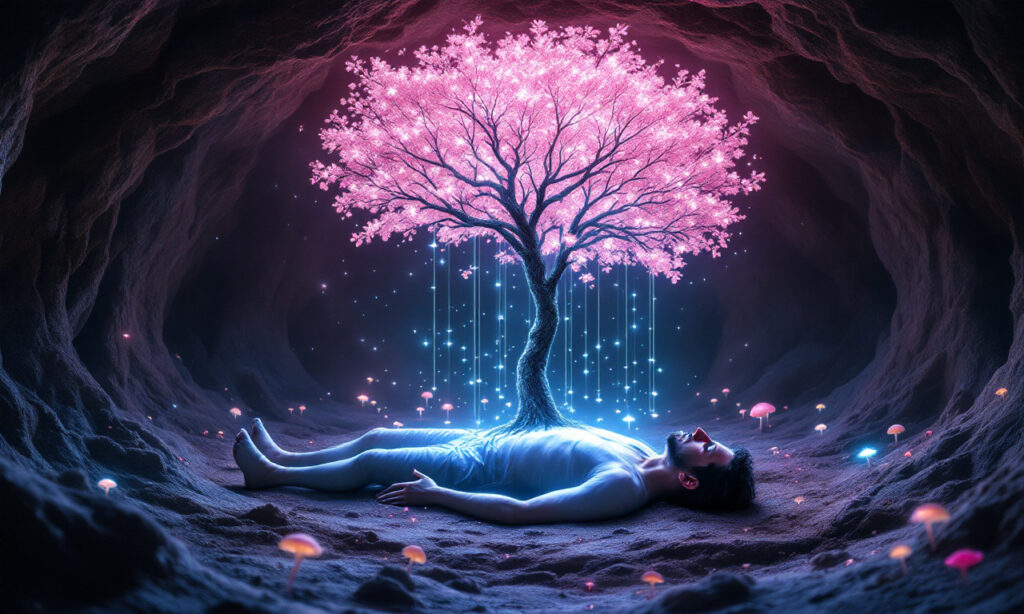
An interesting parallel parable: as a young man, Tatsuhay killed his father for not fulfilling his duty and refusing to follow the custom of ubasute. He buried him in Narayama, where a tree grew that could recognize Tatsuhay.
Questions for the viewer:
- Trees / people: which areas have more / fewer?
- Ancient forests: which areas have them / do not have them?
- Ancient burials in the ground: which territories have them / do not have them?
- Burials in the ground / cremation: can the consequences for the deceased be different?
- Trees: why are they here?
- The old forest: why does it catch fire and burn?